
A rock hits your windshield on the highway. Now a shop asks a hard question: OEM or aftermarket glass? The price gap makes the choice feel risky.
Aftermarket windshield glass is usually the better value for older cars, and OEM glass is the safer default for newer cars with cameras. Both types must meet the same federal safety standard, so the right answer depends on your car's features, your insurance, and your budget.
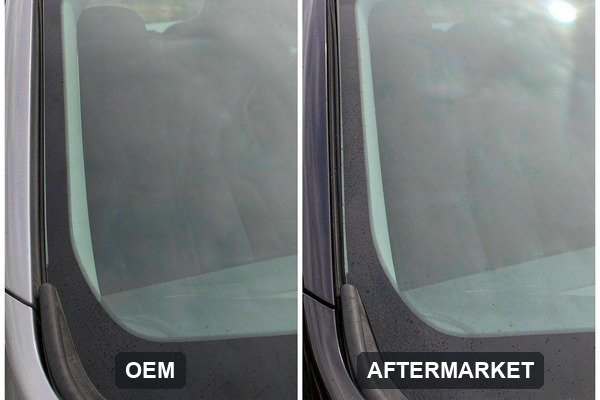
I have replaced windshields on three of my own cars, so I ask a lot of questions at the shop. Here is what I learned about both types of glass.
What Is OEM Windshield Glass?
Dealers often say OEM glass is the only real choice. That sounds safe, but the label hides a simple meaning and a bigger price.
OEM windshield glass is glass made by the same company that supplied your car's original windshield. It is built to the automaker's exact specifications, and it usually carries the car brand's logo in the corner of the glass.
Where does the OEM label come from?
An original equipment manufacturer[1] builds parts for the car brand instead of the parts store. Glass works a little differently from other parts, though. Every windshield sold in the United States must meet Federal Motor Vehicle Safety Standard No. 205[2], which sets the minimum levels for impact resistance, light transmittance, and optical clarity. OEM glass is built on top of that floor with the automaker's tighter tolerances. So OEM glass is not safer by law, just a closer copy of what your car came with.
| Feature | What OEM glass gives you |
|---|---|
| Maker | The same supplier that built the factory windshield |
| Fit | Factory thickness, curvature, and tint band |
| Marking | Automaker logo plus a DOT code |
| Built-in features | Camera bracket, rain sensor port, acoustic layer, HUD zone |
| Price | The highest of the three glass tiers |
What Is Aftermarket Windshield Glass?
Friends told me aftermarket glass was cheap and unsafe. I checked the rules myself, and the real story is more boring and more useful.
Aftermarket windshield glass is replacement glass made by a third-party manufacturer instead of the car brand. It must meet the same federal safety standard as OEM glass, and the best versions are called OEE, or original equipment equivalent.!
Why does aftermarket glass have quality levels?
The AGRSS Standard[3] covers installation, not glass origin, and it tells shops which adhesive to use and how long the car must sit before driving. That matters, because many windshield problems come from bad installation, not from the glass label. So "aftermarket" is a wide category, not one product. The top tier comes from the same large glass makers that supply car factories. The bottom tier comes from unknown suppliers with weak quality control. Ask two questions before you approve a quote: who made the glass, and does the shop follow AGRSS procedures?
| Glass tier | Who makes it | Typical use |
|---|---|---|
| OEM | Factory supplier, car logo on the glass | Leases, new cars, dealer work |
| OEE | Tier-one supplier, no car logo | Most late-model replacements |
| Economy aftermarket | Independent supplier | Older cars without cameras |
Which One Is Better: OEM or Aftermarket Windshield Glass?
I wish there was one clean answer. There is not. The better choice follows your car and your wallet.
Aftermarket glass is better for most older cars without cameras, and OEM glass is better for newer cars with ADAS cameras, head-up displays, or acoustic glass. On a plain vehicle, quality aftermarket glass saves money with no real downside.
When does the camera behind the mirror change the answer?
If your car has lane keeping or automatic braking, a forward camera sits behind the mirror. It sees the road through the glass, so the windshield becomes part of the safety system. AAA studied the cost of ADAS repairs[4] and found that camera work averaged 25.4% of a windshield replacement, about $360 on top of the glass. A large chain says its drivers can choose OEM or OEE glass[5] before the work starts. Either way, the camera needs recalibration, because its angle shifts when the glass comes out.
| Factor | OEM glass | Quality aftermarket glass |
|---|---|---|
| Safety standard | Meets FMVSS 205 | Meets FMVSS 205 |
| Price | Highest | Lower |
| Logo | Car brand in the corner | Glass maker's marking |
| Camera and sensor fit | Factory match | Usually fine, verify the part number |
| Availability | Can take days for rare models | Often same day |
| Best for | New cars, leases, ADAS, HUD, acoustic glass | Older cars, cash jobs, tight budgets |
What Are the Myths and Facts About OEM and Aftermarket Windshield Glass?
A shop once told me aftermarket glass was "a risk." That scared me until I read the federal rule myself.
Common beliefs about OEM and aftermarket glass are mostly wrong. Aftermarket glass meets or exceeds Department of Transportation safety standards, both types follow the same specifications, and the real differences come down to price, branding, and insurance rules.
Which myth costs drivers the most money?
The price myth costs the most. Many drivers pay an OEM premium because they believe the cheaper part is unsafe, and then they skip the calibration that actually keeps them safe. Insurance adds another layer. Glass damage usually falls under comprehensive coverage[6], and many policies pay for aftermarket glass with no deductible on repair. So I always ask my insurer two things first: what glass does my policy pay for, and is recalibration included in the claim?
| Myth | Fact |
|---|---|
| OEM glass is safer than aftermarket glass. | Aftermarket glass meets or exceeds the Department of Transportation's safety standards. |
| There is no big price difference between OEM and aftermarket glass. | OEM glass usually costs more, and insurance is more likely to cover the full cost of aftermarket glass. |
| OEM and aftermarket glass have different specifications. | Aftermarket glass must meet the same specifications as OEM glass to be used in a replacement. |
Frequently Asked Questions
Is Safelite glass as good as OEM?
Safelite installs OEM or OEE glass, and both must pass FMVSS 205, so the safety floor is the same. Differences appear above that floor, in bracket fit, acoustic layers, and camera clarity. Ask for the part number and brand before you approve the job, then confirm the shop will recalibrate your camera.
How do I know if my replacement windshield is OEM?
Look at the lower corner of the glass from outside the car. OEM glass carries the automaker's logo, and OEE glass shows only the glass maker's brand, such as Pilkington or Fuyao. Both should carry a DOT code plus an AS1 marking. You can also ask the shop for the invoice and part number.
Does Safelite use OEM glass?
Safelite offers both OEM and OEE glass, and it says customers can pick either one before service starts. The default for many insurance claims is OEE, because it costs less and meets the same federal standard. If you want factory-branded glass, request it when you book and check whether your policy covers the price gap.
Conclusion
OEM glass matches your factory part, and quality aftermarket glass meets the same safety standard for less money. Choose OEM for new cars with cameras, and choose a good aftermarket part for older vehicles. Then make sure the camera gets recalibrated.
References
Wikipedia — Definition of an original equipment manufacturer and how OEM parts differ from aftermarket parts. ↑ Back
Electronic Code of Federal Regulations — Federal Motor Vehicle Safety Standard No. 205, the glazing standard that every U.S. windshield and replacement windshield must meet. ↑ Back
Auto Glass Safety Council — The AGRSS Standard, North America’s auto glass replacement safety standard covering procedures, education, and product performance. ↑ Back
AAA Newsroom — Cost of ADAS repairs study showing windshield replacement camera work averaged 25.4% of the total job. ↑ Back
Safelite — Company help page explaining the difference between OEM and OEE auto glass and how customers choose before service. ↑ Back
Insurance Information Institute — Auto insurance basics explaining how comprehensive coverage handles broken windshields and glass claims. ↑ Back